The Kiss that claimed me
On Klimt’s The Kiss, hieros gamos and the secret longing to be touched as an offering while staying fiercely, shamelessly oneself.
Recently, someone asked me a strange question: if I had to pick one painting out of the world of art, which one would it be?
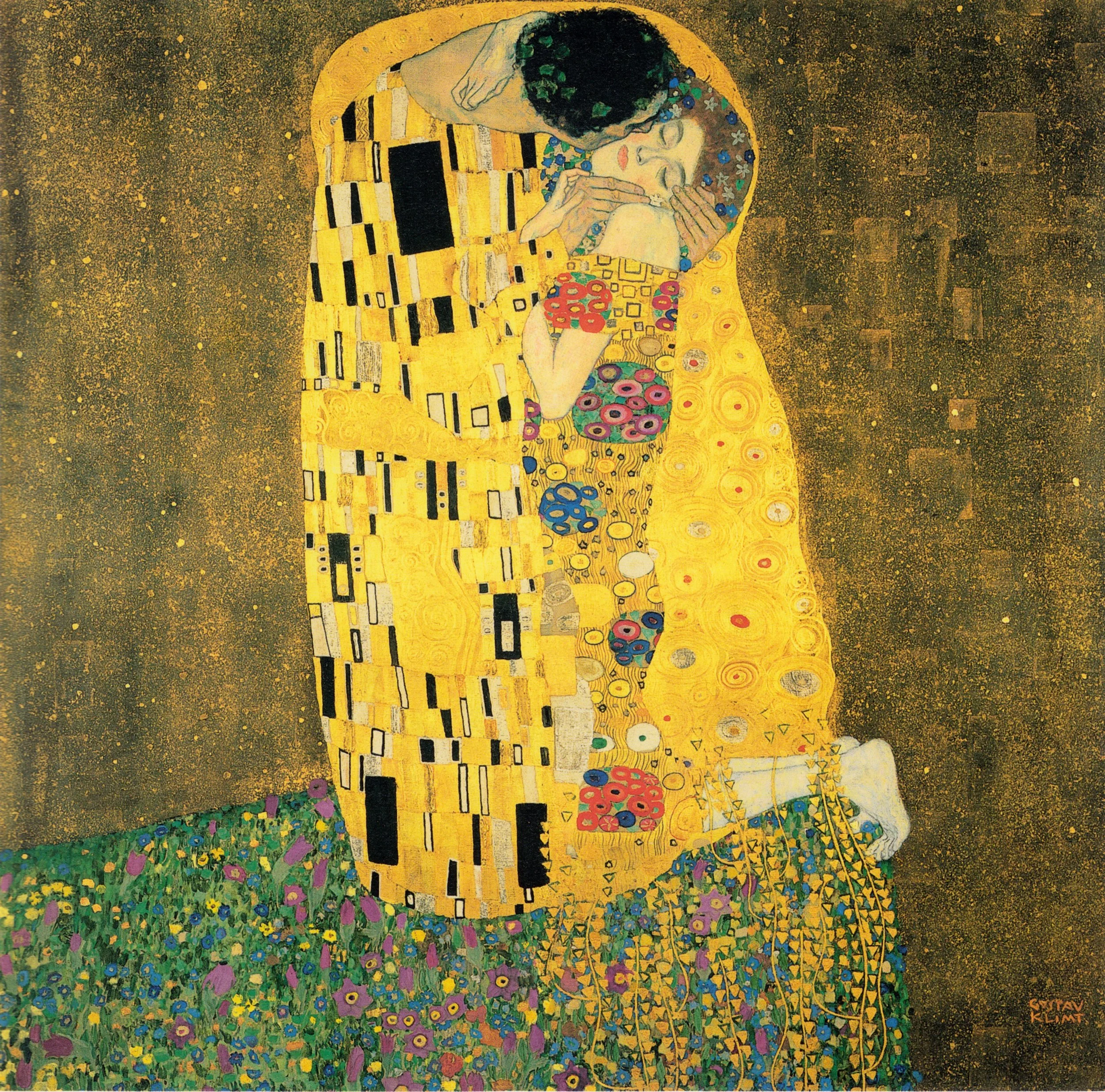
I said: The Kiss by Gustav Klimt.
Their reaction did not surprise me. People either adore this painting or project all kinds of stories onto it. Over the years, I have heard so many people read it as a scene where the man is forcing the woman, as if she is trapped in his grip. That version has never felt true in my body.
The Kiss was painted around 1907, at the height of Klimt’s Golden Period, and is covered in real gold leaf. The gold reflects his fascination with Byzantine mosaics and sacred art and marks this painting as the climax of that whole phase of his work, an image where spiritual and erotic love merge and the two figures almost dissolve into the eternal cosmos. To me, Klimt was not simply painting two lovers, he was painting hieros gamos, the sacred marriage.
For me, The Kiss has always meant much more than a romantic image. It is a moment suspended between ecstasy and devotion, between body and cosmos, between human touch and something that feels like pure god. It reveals an entire universe about love, surrender and sacred union. A sacred union between a Dom and his Sub. It does not whisper. It shouts: You are MINE.
I was eighteen when I came across this painting for the first time in an art book at the library. I remember how my whole body stopped. I was so damn captivated by the intimacy it holds that I became obsessed. I printed it in different formats and had it everywhere in my room. Back then, printing was a thing. You actually had to go and make it happen. It felt like building a private shrine.
I would lie there and stare at it, over and over, asking myself what it would feel like to be in her position. To feel my lover’s touch and dominance all over my body. To surrender fully into his control, not from fear but from deep trust.
The way she is being held, she is not just being kissed. She is entering a state, a moment of erotic spirituality, a return to something ancient in the body, a worship rather than a performance. Her toes curl at the edge. She is standing at that threshold where you do not know if she is about to fall or fly. That is why the painting feels alive to me. It captures the breath right before dissolving into the sacred.
I believe Klimt painted what most people feel but cannot easily articulate. The longing to be held like scripture. To be touched like an offering and not an obligation. To disappear inside love without abandoning yourself. To experience eroticism as devotion. The painting speaks to something primal and divine at the same time.
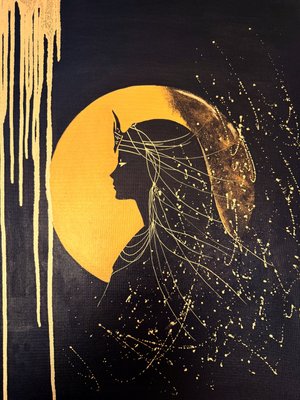
My art comes from this kind of place. The Kiss is one of the seeds in my system, among many other influences. The flavour of sensuality I bring into my own paintings lives in that same tension, a mixture of vulnerability and power, yielding and commanding, surrender and sovereignty.
It is not about being weak. It is about liberation. The kind of liberation that happens when you allow yourself to be both the one who kneels and the one who is worshipped.