What They Called Impure
Originally posted on substack.
Women were taught to flinch at their own blood…
This is a question I have carried for a very long time, because I grew tired of hearing all sorts of things from both men and women when it comes to menstruation. Extreme menstrual pain is real. To me, it has never felt like something that can be dismissed as just hormones or reduced to a temporary fix, especially when those fixes often become something the body is then expected to depend on. It feels deeper than that. Much deeper. And that pain is a message in itself, the body calling attention to what has been ignored, suppressed, or left unresolved.
I have been reflecting on this for years, trying to understand why there is so much taboo around a bleeding woman, why something so ancient, cyclical, and alive has been made to feel shameful, impure, or inconvenient. This post comes from that inquiry.
I am not a doctor or an academic. This is a personal reflection shaped by lived experience, research, and a long contemplation of the body, religion, and the stories women have been taught to carry about their blood. I hope it offers something useful, clarifying, and perhaps even liberating.
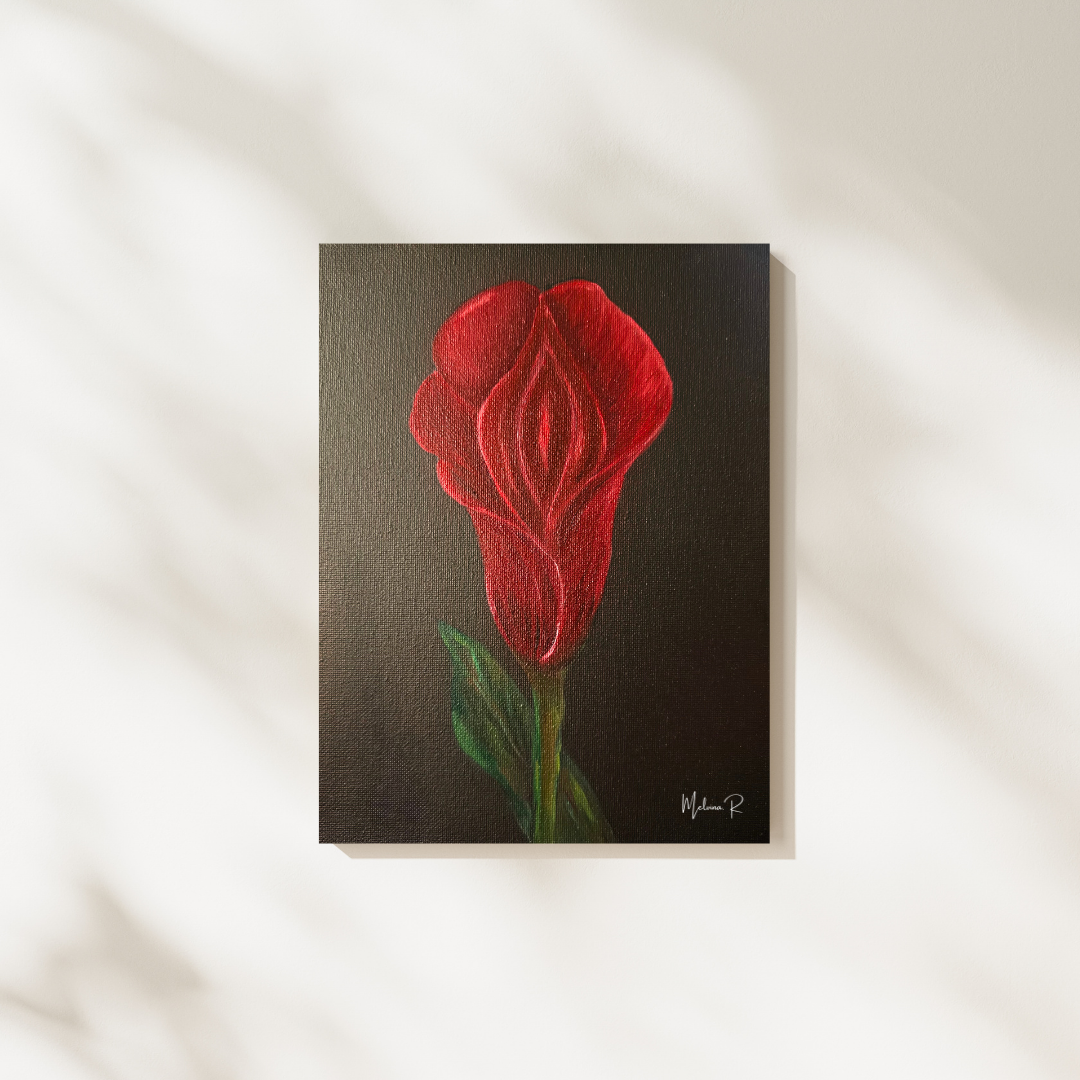
Womb of shadow, blood of truth, open the sealed places.
Undo the shame. Unbind the silence from the bone.
Turn the wound into wisdom, the ache into seeing, the bleed into return.
Let what was hidden gather its power.
Let what was feared take back its name.
Let the body descend in its own darkness, and rise carrying more of its own fire.
Before religion reduced menstruation to impurity, before men wrote it into law as contamination, menstruation was often understood as power. Liminal. Dangerous. Sacred. What changed was not the blood. What changed was who got to name it.
For generations, bleeding was cast as shameful, unclean, inconvenient, something to conceal from men, something to endure quietly. Something that made women less spiritual, less desirable, less welcome in sacred space. But menstruation was never the problem. The problem was always what it represented: a body that cannot be fully controlled, a rhythm that answers to something older than law, a form of intelligence that does not ask permission from priests, institutions, husbands, or frightened little men who silence what they cannot hold.
Menstrual wisdom is bodily intelligence, not impurity. What patriarchy could not master, it turned into shame.
The ancient complexity
This history was never simple. In many traditions, menstrual blood was not treated as merely dirty. It was seen as powerful, liminal, ritually charged. That distinction matters. What is sacred is often fenced. What is powerful is often regulated. What is feared is often renamed as impure.
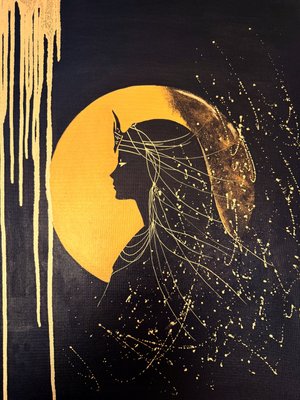
The older world did not sever the moon from the sun. The sun was the visible force, the outward self, what could be seen, named, measured, expressed. The moon belonged to another order. She ruled the hidden waters, the shadow, the void, the inner world, the subconscious, instinct, feeling, memory, and the unseen movements that shape a being long before language does. Neither was above the other. They formed a sacred balance.
The menstrual cycle is not only biological. It is symbolic, archetypal, initiatory. It draws a woman inward, into sensation, release, heightened intuition, and the quiet chambers of the body where truth does not perform but pulses. Bleeding is not a failure of purity. It is a return to the inner temple, a descent into dark waters where cleansing, grief, wisdom, and renewal meet. What came later was not the invention of power, but the tightening of control around it.
Inanna and the descent
Before the empires of the West, before the laws that would harden into religious control, there was Inanna. The Sumerians called her Inanna. The Babylonians called her Ishtar. She is among the oldest named goddesses in recorded human history, and she was not soft. She was the Queen of Heaven and Earth, goddess of love and war, justice and desire, grain and storm and the morning star. She was autonomous in a way that made even the gods uneasy. She was not the consort of power. She was its source.
Her most sacred myth is the Descent, pressed into clay tablets more than four thousand years ago. Inanna chooses to descend into the Great Below, the realm of death ruled by her sister Ereshkigal. At each of seven gates she surrenders something, her crown, her robe, her jewels, her power, until she arrives in the underworld naked, stripped of every identity, every protection, every adornment of the self she carried above ground. She is judged. She is struck dead. She is hung upon a hook, emptied of her former shape. For three days and three nights she remains below, cradled in the underworld beneath the dark moon, in the hidden passage where radiance disappears and the unseen begins its work.
Inanna, daughter of the Moon God Nanna, carries that lunar inheritance into the descent itself, into the vanished light, the sacred interval, the underworld phase of the cycle where return has not yet begun but transformation is already underway. This is the menstrual cycle written in mythic language. The withdrawal. The descent into the body’s interior. The shedding of the outer self. The time in the dark that feels like death to those who have never been taught what it is for. And then the return, renewal, re-emergence, changed by what the dark held.
Ereshkigal is not the villain. She is the dark sister, the keeper of the depth, the one who receives what the upper world cannot hold. Every cycle has its underworld. They wrote it in clay so it would last. It lasted. We simply stopped reading it.
Ancient Egyptian and the body as cosmos
In Khemet, ancient Egypt, the evidence suggests a far more layered view than modern stigma would have us believe. Hsmn, an ancient Egyptian term associated with menstruation, appears in some contexts within a symbolic field of purification rather than simple defilement. Female blood belonged to a wider order tied to fertility, protection, rebirth, and ritual potency. This is not the language of disgust. It is the language of power.
Auset (Isis), the great mother and divine magician, was not diminished by the body. She was the body as cosmic intelligence. Through the Tyet, the Knot of Auset, her power moved as protection, blood, life, and restoration, an amulet carrying the force of the feminine made sacred. Het-Heru (Hathor), goddess of love, music, beauty, and the womb, presided over birth and the afterlife alike, because creation and dissolution belong to the same hand. Bastet, the Lady of the East, guarded the intimate world of women, fertility, sensuality, protection, and the unseen mysteries carried within the female body. Tefnut, goddess of moisture and life-giving waters, carried the sacred wetness from which life is sustained and restored. Sekhmet, the lioness, embodied the fiercer force, the heat of transformation, the blood that burns away what is finished. Nut arched herself across the sky as the vault of heaven, swallowing the sun each night and birthing it again each dawn.
These were not metaphors for passive femininity. These were the forces that held the world in motion. Menstruation, in this cosmology, was not impurity. It belonged to the same sacred order these goddesses moved through and embodied.
Menstrual blood appears in ancient Egyptian ritual and medical texts as something that heals, protects, and belongs to the same order as the Nile’s flood, the overflow that makes life possible.
Ancient Greek and the living underworld
In this, the ancient Greeks were not far from the ancient Egyptians. They too understood that descent, darkness, and return belonged to the sacred order of life. The Greeks gave us something precise and devastating, a myth that traces the menstrual cycle so intimately it feels known from within. Persephone descends into the underworld and becomes its queen. She does not simply visit the dark. She enters it fully and rules beside Hades, not as something swallowed by death, but as a woman crowned within it. She eats the pomegranate, the red fruit of binding, and through that blood-bright act is joined to the rhythm of return itself. Every year she rises to the surface world, and every year she descends again. The seasons are shaped around her movement. When Persephone is below, the earth goes barren. When she returns, it flowers. The living world breathes in rhythm with her descent and return.
This is not a myth about weakness. It is a myth about cyclical power so fundamental that the earth itself cannot function without it. Demeter is the grief that accompanies the descent, the mother who cannot eat, cannot sleep, cannot tend the world whilst her daughter is below. The cycle is not only felt by the woman who undergoes it. It moves through everything connected to her. The land mourns. The harvest waits. The world pauses whilst the descent runs its course. In the Thesmophoria, women entered that rhythm through fasting, mourning, and ritual withdrawal, stepping out of the ordinary order to honour the goddesses who hold descent and return.
Selene moved above it all as the moon herself, waxing, waning, disappearing, and returning. Even in the roots of the language, the bond remains close: month, moon, and menses belong to the same family of time. Hekate, the Dark Mother, stands at the crossroads, bearing torches into places where the sun does not reach. Artemis, swift and untamed, presided over the threshold years of becoming and the first blood of initiation.
The Greeks had a word for sacred force moving through the body, enthousiasmos, being filled with the divine. In the older understanding, heightened sensitivity and raw instinct were not pathology. They were the body lit from within. Menstruation was not disorder. It belonged to the same sacred rhythm these goddesses moved through, descent and return, darkness and bloom, grief and renewal.
The Maya held blood within a cosmology of sacred charge. Menstruation was not trivial. It belonged to a world in which cycles, thresholds, danger, and power were entwined. Ix Chel, the Elder Moon Goddess, was patron of medicine, weaving, childbirth, water, and the tides. She was both healer and destroyer, tender and terrible, the moon in fullness and in dark withdrawal. She ruled fertility and menstruation, life and death, and was invoked by women for protection through pregnancy, birth, and the hidden workings of the body. She understood cycles because she was one.
Ixquic, the Blood Moon Maiden, gave birth to the Hero Twins after being impregnated by the severed head of a god. Hers is a story of blood as generative miracle, of death becoming fertility, of the womb as the site where endings become beginnings. Even Ix Tab, Goddess of the hanged, presided over threshold and passage rather than shame.
In Mayan cosmology, blood, including menstrual blood, was precious, an offering, a substance through which humans communicated with the divine. To bleed was to participate in the sacred economy of the universe. Anything that lives that close to mystery will always make controlling systems uneasy.
Jewish law and cosmic exile
In biblical and rabbinic law, niddah marks menstruation, separation, and ritual impurity, but ritual impurity is not the same thing as moral corruption or personal sin. The original category belonged to a larger symbolic system of life, death, thresholds, and access to ritual space. Yet under patriarchy, that nuance collapses. What was once a charged spiritual condition becomes social stigma laid upon the female body.
Kabbalah preserves something older and stranger. The Shekhinah, the divine feminine presence, the dwelling of God in the world, is described in mystical texts as the aspect of the divine that weeps, wanders, and feels the rupture of exile in her own body. She is not the distant God of the mountaintop. She is the God who remains in the wound, who stays in the dark, who does not leave when things break. In Kabbalistic thought, the state of niddah is sometimes mapped onto her exile. The separation is not punishment. It is cosmic mourning. The bleeding is the mark of a world not yet restored to wholeness.
And then there is Lilith, shaped from the same earth as Adam, who refused to lie beneath him and refused subordination. What was done to Lilith is precisely what was done to menstruation. Something sovereign and ungovernable was demonised. The original offence was the same: refusing to submit.
Again and again, the pattern repeats: what cannot be governed is recast as dangerous, and what is dangerous is taught to women as shame.
Hinduism and the bleeding goddess
Hindu traditions carry one of the clearest paradoxes of all. In many communities, menstruation is surrounded by restriction, exclusion, and silence, women barred from temples, kitchens, and prayers. And yet Hindu cosmology preserves lineages in which menstrual power is inseparable from the sacred feminine herself. The goddess bleeds. Fertility, creation, monsoon, desire, death, and renewal all move through the same field. Menstruation is honoured when it belongs to the goddess, but often shamed when it appears in the bodies of women. That contradiction says everything.
Kali Ma, the Dark Mother and destroyer of illusion, stands garlanded in severed heads, standing on the chest of Shiva himself. She is time, death, the womb that devours and the womb that creates. Durga rides a tiger into battle, beautiful precisely because she is fierce. These are not gentle accommodations of the feminine. These are proclamations of it.
And then there is Kamakhya, whose shrine in Assam is built around the site where the goddess’s yoni fell to earth. Every year, Ambubachi Mela celebrates Kamakhya’s menstruation. The temple closes. The Goddess bleeds. The earth is considered especially fertile. Pilgrims travel from across India to receive the blessing of that sacred blood. The tradition does not forget. It simply does not always apply what it knows to the women living inside it.
In older Tamil traditions, Ananku names a fierce form of female sacred power — volatile, uncontained, the force of the female body when sexuality, danger, fertility, and spiritual charge are held too close together to be made comfortable. It belongs beside the older memory of menstrual power: raw, potent, sovereign, the body in its untamed holiness. Shakti, the primordial feminine energy from which all creation flows, makes the deeper truth plain. The tradition knows menstrual power is divine.
Christianity and the inherited stain
Christianity inherited much of this symbolic world through Leviticus, where menstruation is named as ritual impurity. Over centuries, female bleeding became tangled with exclusion, suspicion, and theological discomfort. Even where some religious voices argued that menstruation was natural and not sinful, the wider cultural message had already been seeded. Woman as body. Body as danger. Blood as shame.
The Church speaks easily of sacrifice, sacred wounds, redemption through blood. But the bleeding body of a woman has rarely been granted the same reverence. The symbolism is exalted. The woman herself is kept at a distance.
Islam, too, is often flattened in modern conversations, when the reality is more layered. Menstruation changes certain ritual obligations, but it is not a mark of sin or spiritual failure. Yet again, the distinction between bodily state and moral worth is one that patriarchal culture repeatedly distorts. Restriction becomes stigma. Difference becomes degradation.
The deepest issue was never blood itself. Blood was simply too honest, carrying the wisdom of the womb, the internal knowing of a woman’s body. Systems that did not know how to honour that power tried to control it instead.
This is how patriarchy survives, by teaching women to internalise disgust towards the very bodies they live inside.
Intimacy and the bleeding body
What was renamed as impure did not stop at the altar. It entered intimacy too, shaping shame, desire, touch, and the ways women were taught to receive their own bodies. Intercourse during menstruation became another site of taboo, fear, and control. In some traditions, including Zoroastrian frameworks, bleeding was treated as intensely polluting and intercourse during menstruation was strictly forbidden, with violation carrying serious ritual consequence. In other traditions, the caution came through a different understanding, not moral disgust, but the recognition that bleeding marked a time of release, purification, and altered energetic movement.
In Ayurvedic thought, this is linked to Apana Vayu, the downward force that governs elimination and release. From that view, penetration during menstruation could disturb the body’s natural flow, redirecting what is meant to move downwards and outwards. That is not ignorance. It is one way of understanding the intelligence of the body.
And yet older esoteric streams held another truth alongside it. They understood that sex during bleeding could also become a heightened exchange, not casual, not careless, but charged. Blood has long been linked to life force, creation, sacrifice, and the fierce alchemy of transformation. In that sense, intercourse during menstruation was never only taboo. It was sometimes approached as a threshold act, a form of red alchemy, where desire meets release, where intimacy enters the underworld, where the body is not closed in shame but opened in power. Not every man can meet a woman there. Not every connection is capable of holding that depth.
That is where discernment becomes sacred. No text outranks the body when the body is truly listened to. If a woman feels depleted, emotionally ungrounded, or simply does not want to be entered, that wisdom is enough. If the connection lacks reverence, presence, or genuine devotion, the exchange will feel like taking rather than merging. The issue is not manhood itself, but whether the man before her has made peace with depth, blood, and the underworld within himself.
In the right hands, with a man who has met his own darkness and does not fear hers, sex during bleeding becomes another form of sex magick, blood magick woven through the body, where desire, release, and sacred intensity meet. The blood is no longer something to recoil from. It is met with reverence. And a man who truly understands that does not diminish in its presence. He recognises the depth, the honour, and the beauty of being allowed near it.
The body’s language
Menstruation reveals that the female body is cyclical. It withdraws, opens, releases, empties, renews. It follows an inward law. It remembers. It speaks in ache, hunger, grief, intuition, softness, rage, fatigue, sensitivity, and sharpened perception. It asks for attunement, not domination.
And that is precisely what patriarchal systems cannot tolerate. A woman deeply attuned to her body is harder to rule, harder to gaslight, harder to shame into disowning herself, harder to sever from instinct.
So the bleeding body was recast as unstable. Impure. Excessive. Unclean. Not because it was empty of power, but because it carried too much of it.
The moon waxes and wanes without apology. It disappears and comes back changed. It does not perform permanence. Sometimes power is what withdraws. Sometimes power is what empties. Sometimes power is what bleeds.
This is a naming
Bleeding has long been recognised as a sacred time of heightened intuition, deep cleansing, descent, and inner listening. A threshold where the body becomes louder than social conditioning. A time when the veil thins between instinct and knowing, when what has been buried rises closer to the surface, when the body asks not to be managed but to be heard.
This is not weakness. It is not inconvenience. It is not some unfortunate interruption to a more acceptable version of womanhood. It is the body returning to its own law. The womb releasing what is finished. The nervous system remembering what the world taught women to suppress. The inner world drawing closer. What is felt during bleeding is often what the outer world teaches women to suppress the rest of the month, grief, tenderness, rage, exhaustion, hunger, clarity, the need for stillness, the need for truth.
Some women feel raw when they bleed. Some feel clear. Some feel exhausted. Some feel psychic. Some feel grief they have not had time to touch. Some feel absolutely nothing mystical at all, only pain and the need to be left alone. Some feel everything at once and need to be held. All of that belongs. Sacred does not mean pretty. Sacred means what is real. Sacred means what cannot be edited into something more comfortable.
The taboo was never truth. It was strategy.
A strategy that made women distrust the very body that births life, sheds what is finished, and knows how to begin again without asking anyone’s permission.
A strategy that taught women to turn away from their own blood, their own intuition, their own cycles, so they would doubt the intelligence living inside them.
Shame was the weapon.
Disconnection was the goal.
That rupture did not remain in the ancient world. It lives on in the lowered voice, in the reflex to conceal, in the girl taught to feel ashamed by her own body before she has even learned to listen to it. It lives on in pain dismissed as exaggeration, in moods mocked as instability, in blood treated as something dirty unless it can be packaged, sanitised, and made invisible. It lives on anywhere a woman is taught to mistrust her own rhythm in order to remain manageable.
So menstruation is not dirty.
It is ancient.
It is intelligent.
It is a sacred truth of the body that patriarchal religion tried to turn into silence, because anything that reminds women of their own power has always been dangerous to systems built on their obedience.
The blood still comes as oracle.
The womb still keeps its dark calendar.
The moon still pulls on waters seen and unseen.And beneath all that was shamed,
the body always returns to its knowing.
Resources/ Additional Reading
Ix Chel’s Coiled Snake Headdress: Sacred Symbol of Maya Women
Exclusionary Practices in Ancient Mesopotamia: Steps Towards a Bio-Cultural Approach
Contextual Reading of QS. Al-Baqarah [2]: 222 with the Ma’na Cum Maghza Approach
Books:
Women in Antiquity: Real Women across the Ancient World by Stephanie Lynn Budin and Jean MacIntosh Turfa
Becoming a Woman and Mother in Greco-Roman Egypt: Women’s Bodies, Society and Domestic Space by Ada Nifosi
Blood, Bread, and Roses: How Menstruation Created the World by Judy Grahn
Sensual by Henika Patel
Thank you for reclaiming what was hidden with me. If you feel a pull toward this work, you can support my practice by welcoming a print into your space. Your presence keeps this work alive.